
Rennet Preparation
Rennet Preparation is a food-grade milk-coagulating enzyme system used in industrial cheese manufacturing to convert fluid milk into a structured casein gel. Depending on the grade, it may be based on animal chymosin and pepsin, microbial coagulants or fermentation-produced chymosin. The correct selection affects coagulation time, curd firmness, whey drainage, moisture control, cheese yield, texture development and flavour performance during ripening.
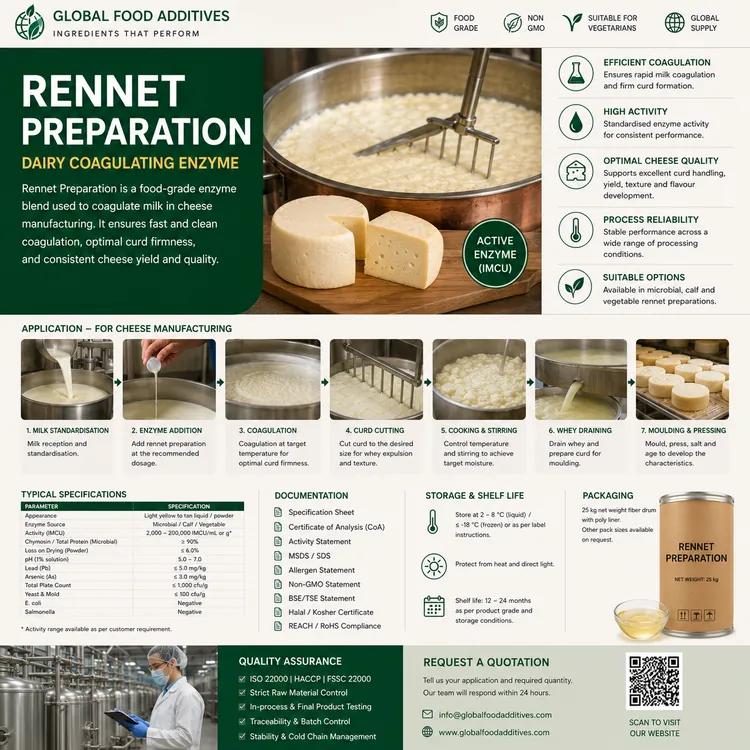
Product identity
| Product | Rennet Preparation |
|---|---|
| Category | Enzymes & Processing Aids |
| Primary function | Milk coagulation, curd formation and whey separation in cheese production |
| Enzyme basis | Chymosin, pepsin, microbial coagulant or fermentation-produced chymosin, depending on grade |
| E / INS number | Not normally handled as a single universal E / INS number; verify food-enzyme or processing-aid status by destination market |
| CAS / identity | Coagulating enzyme preparation; exact identity depends on enzyme source, carrier and formulation |
| Typical form | Liquid, powder, granulate or tablet preparation |
| Typical activity reference | Supplier-specific milk-clotting activity such as IMCU or equivalent declared activity unit |
| Key buying criteria | Activity strength, enzyme origin, halal/kosher/vegetarian status, shelf life, storage temperature and application trial performance |
Application fit
Rennet Preparation is mainly selected for dairy plants where controlled enzymatic coagulation is required. Potential use areas may include:
- Hard and semi-hard cheese production
- Soft cheese and fresh cheese manufacturing
- Pasta filata and stretched-curd cheese processes
- Industrial curd setting and whey separation
- Cheese analogue or recombined milk applications where permitted
- Process trials for yield, moisture and texture optimisation
Industrial function in cheese manufacturing
Rennet acts on κ-casein at the surface of casein micelles, destabilising the milk protein system and allowing calcium-assisted aggregation into a gel network. In commercial production, this enzymatic phase is followed by curd cutting, cooking or scalding, whey drainage, moulding, pressing, salting and ripening according to the cheese type. The selected rennet preparation therefore influences not only the speed of coagulation but also downstream cutting behaviour, fines losses, whey clarity, moisture retention, cheese body and maturation profile.
Technical performance factors
- Coagulation time: the time required to reach target gel strength after enzyme addition.
- Curd firmness: important for consistent cutting, reduced curd fines and improved vat control.
- Proteolytic profile: excessive non-specific proteolysis may affect bitterness, texture breakdown or ripening behaviour.
- Milk composition: protein, fat, calcium balance, heat treatment and seasonal milk variation can change enzyme performance.
- Process pH: rennet activity is strongly linked to pH; starter culture acidification and milk standardisation must be considered together.
- Temperature: coagulation temperature should match the cheese technology and the supplier’s recommended operating range.
- Calcium availability: calcium chloride is sometimes used in cheese plants to improve coagulation response, subject to local regulations and formulation needs.
Typical selection questions
- Is the target product animal rennet, microbial rennet or fermentation-produced chymosin?
- Which activity strength is required and how is the activity measured by the supplier?
- Is the enzyme suitable for the target cheese type and ripening period?
- Does the customer require halal, kosher, vegetarian, non-GMO or specific origin documentation?
- Is cold-chain storage needed during transport, warehousing or plant use?
- Does the buyer need a liquid product for automated dosing or a powder/tablet product for smaller batches?
Process and dosage considerations
Commercial dosage should be determined by plant trials and supplier guidance. The practical dose depends on milk type, protein level, pasteurisation history, coagulation temperature, target set time, cheese technology, calcium balance, vat size and required curd firmness. For reliable scale-up, manufacturers normally compare rennet options under the same milk, pH, temperature and cutting conditions rather than relying only on catalogue activity values.
Common commercial types
| Type | Typical position | Purchasing considerations |
|---|---|---|
| Animal rennet | Traditional dairy coagulant based on enzymes from animal origin. | Check animal origin, BSE/TSE statement, religious certification, import rules and customer label expectations. |
| Microbial rennet | Non-animal coagulant produced from selected microbial sources. | Review flavour impact, proteolytic activity, cheese type suitability, vegetarian acceptance and supplier declarations. |
| Fermentation-produced chymosin | Chymosin produced by controlled fermentation using selected production organisms. | Confirm GMO-related declarations, regulatory acceptance, activity unit, purity profile, certification and market suitability. |
| Blended rennet preparation | Combination of coagulant activities designed for specific cost, performance or cheese targets. | Request exact enzyme ratio, activity method, application data and sensory impact during ripening. |
Quality, storage and handling
Rennet is an enzyme product, so activity can be affected by time, temperature, moisture, contamination and incorrect handling. Liquid grades may require cool storage and protection from freezing or excessive heat. Powder, granulate and tablet grades should be kept dry, sealed and protected from humidity. In industrial plants, operators should avoid direct contact with aggressive cleaning chemicals, high-temperature zones and uncontrolled dilution practices that may reduce enzyme activity or cause dosing variation.
- Store according to the supplier’s declared temperature range and shelf-life conditions.
- Use clean dosing equipment and potable or process-approved dilution water where dilution is recommended.
- Record lot number, opening date, storage condition and dosage rate for traceability.
- Validate performance after long transport routes, seasonal storage or warehouse temperature deviations.
- Keep enzyme products separated from strong oxidisers, acids, alkalis and sanitation chemicals.
Technical purchasing notes
When reviewing Rennet Preparation, compare the supplier specification against the intended cheese technology, milk source, target set time, regulatory market, religious certification needs, allergen position, label expectations and plant dosing system. For industrial purchasing, a strong inquiry normally includes the desired enzyme type, activity unit, target cheese application, approximate dose, physical form, packaging size, annual or trial quantity, destination country and required documentation.
Documents to request
- Product specification or technical data sheet with enzyme identity and activity unit
- Certificate of analysis for available batch or lot
- Safety data sheet where applicable
- Food-grade statement and intended-use declaration
- Origin, manufacturer, shelf-life and storage information
- Halal, kosher, vegetarian or vegan suitability declaration where required
- GMO status declaration, including production organism information where relevant
- BSE/TSE statement for animal-origin grades where applicable
- Allergen statement and carrier composition
- Microbiological specification and heavy metal limits when requested
- Label draft, packaging details, pallet configuration and transport requirements
- Market-specific declarations required by the destination country
Packaging and logistics
Rennet Preparation may be supplied in small trial packs, bottles, jerrycans, drums, sachets, bags or cartons depending on form and supplier. For export shipments, buyers should confirm whether the product requires temperature-controlled transport, insulated packaging, data logger use or expedited shipping. Documentation should also match the commercial invoice, packing list, certificate of analysis and destination-market import requirements.
How to request this product
Send the product name, preferred enzyme type, target activity or reference specification, cheese application, quantity, destination country, packaging preference, expected shipment date, temperature requirement and document list. If you already purchase Rennet Preparation, attach or describe your existing specification, label, certificate of analysis or activity unit so supplier options can be compared more accurately.
Useful answers
What is Rennet Preparation used for in food manufacturing?
Rennet Preparation is mainly used in dairy manufacturing to coagulate milk, form curd, support whey separation and produce cheese with controlled texture, moisture and ripening behaviour. It is especially relevant to cheese plants, fresh cheese lines and industrial curd-setting operations.
Which enzyme type should I choose?
The right type depends on the cheese variety, customer requirements and destination market. Animal rennet may be preferred for traditional profiles, microbial rennet may support non-animal positioning, and fermentation-produced chymosin may offer high specificity and consistent performance. Supplier documentation and plant trials should guide the final decision.
Which technical parameters should be compared?
Compare coagulating activity, enzyme origin, chymosin-to-pepsin ratio or microbial identity, recommended dosage, pH and temperature range, carrier system, storage stability, microbiological limits, allergen status, religious certification and performance in the target cheese process.
Can Global Food Additives source Rennet Preparation?
Global Food Additives can review sourcing options for Rennet Preparation according to target enzyme type, activity specification, quantity, destination, packaging, storage requirements and documentation needs.
Which documents should be requested?
Buyers commonly request a technical data sheet, certificate of analysis, safety data sheet where applicable, food-grade statement, origin information, shelf-life statement, storage instructions, allergen declaration, GMO statement, halal or kosher certificate and packaging details.
Is this product permitted in every country?
No. Food enzyme and processing-aid use depends on destination-market rules, enzyme source, food category, use level, label requirements and buyer responsibility. Regulatory status should be checked before import, formulation and commercial sale.
Tell us which rennet preparation or dairy enzyme you need.
Send the target enzyme type, activity specification, cheese application, quantity, destination country, packaging preference, delivery term, storage requirement and document package. Our team will review your inquiry and respond from orders@foodgradeadditives.com.
Your message has been received. You will be redirected to the home page.